


NGOs take stand for Re-purposing waste

Updated: Sep 20, 2020
While the problems of waste pollution have been visible for decades now -- urban spaces with weak waste management policies have black spots, polluted water supplies, unmanageable and overflowing landfills -- plastics are now a dangerous facet of this form of pollution.
The impacts appear to be unavoidable and not easy to manage due to the mounting public health problems caused by non-segregation of solid wastes at the source and their subsequent improper management.

Representational image
“Among the non-recyclables is one material in particular that has great potential is clothing. The unwanted clothes that were thrown away would end up in landfill or be incinerated, witnessing countless good quality clothes that have been discarded with the mixed dry waste, some looking completely new. They come in all shapes, sizes, styles, and saturations. When clothes of this condition end up mixed among other dry waste at a DWCC (Dry Waste Collection Centers), their quality and their lifetime decline due to various forms of contamination,” said Indha Mahoor, Program Manager at Hasiru Dala @hasirudala
The project creating jobs that make entrepreneurs out of waste pickers by collecting clothes from door to door households and segregate clothes during collection, to make sure there is no possible contamination.
The waste pickers identify second-hand clothing markets to sell the clothes they collect. If they cannot find a market themselves, Hasiru Batte helps them connect to second-hand clothing markets, which is profiting the waste pickers and clothes saved from contaminating and ending at incinerators or landfills.
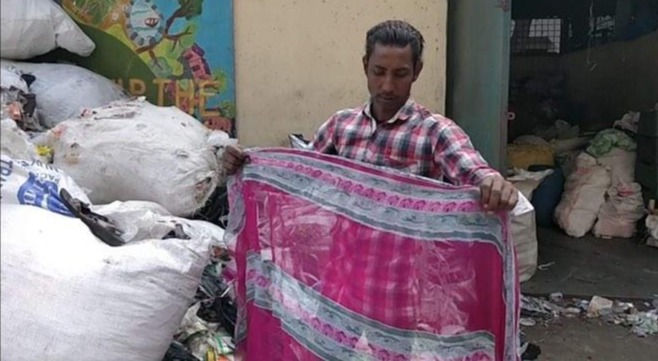
Waste pickers pick- Amber Longrie
Dr.Meenakshi Bharath, a gynecologist said, "A woman uses about 6000 disposable sanitary pads in her lifetime and most of them end up in landfills. If not burnt properly, the pads can emanate dioxins, an environmental pollutant, and a carcinogen. Use menstrual cups for no rash, no cash, and no trash!"
Sukhibhava Foundation, train women to stitch their cloth pads an educating them about the menstrual cup, keeping in mind their personal choices and encourage them to join the journey towards sustainable and environment-friendly menstruation.
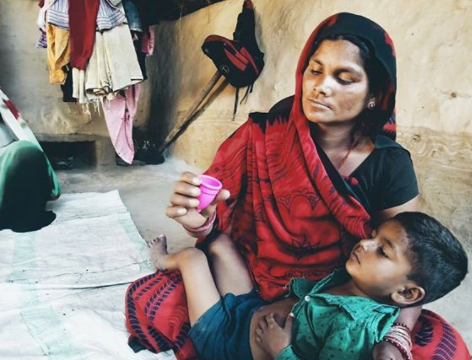
Picture Credits - Sukhibhava Foundation
Greenon, an urban garden that works on waste reduction and feature composting education, demonstrating the various composting systems that can be used for home gardening.
"We try to educate the community about the various types of composting that can be done in homes and apartments. This includes aerobic, wormy, microbial and anaerobic, after 30-40 days, the compost transforms into a rich soil that can be added to home vegetable gardens growing capsicum, eggplant, tomatoes, and leafy greens, " said a volunteer of Swachagraha Kalika Kendra.

Compost soil - Anna Mary
Re-purposing being the great way to keep things out of the dump, Barefoot College, Tilonia has come up with innovative soundproofing repurposed cardboard egg cartons for the campus radio station, which broadcast in Hindi and Rajasthani to the surrounding area.

Campus radio station- Anna Mary
Hence, the problem of waste disposal can be easily converted into a solution through a few such innovative ideas and basic techniques, bringing light into our daily lives


Comments